
Scent and State of Mind: A Sober Guide to Aromatherapy
10 July 2026 · By Mind Mauritius
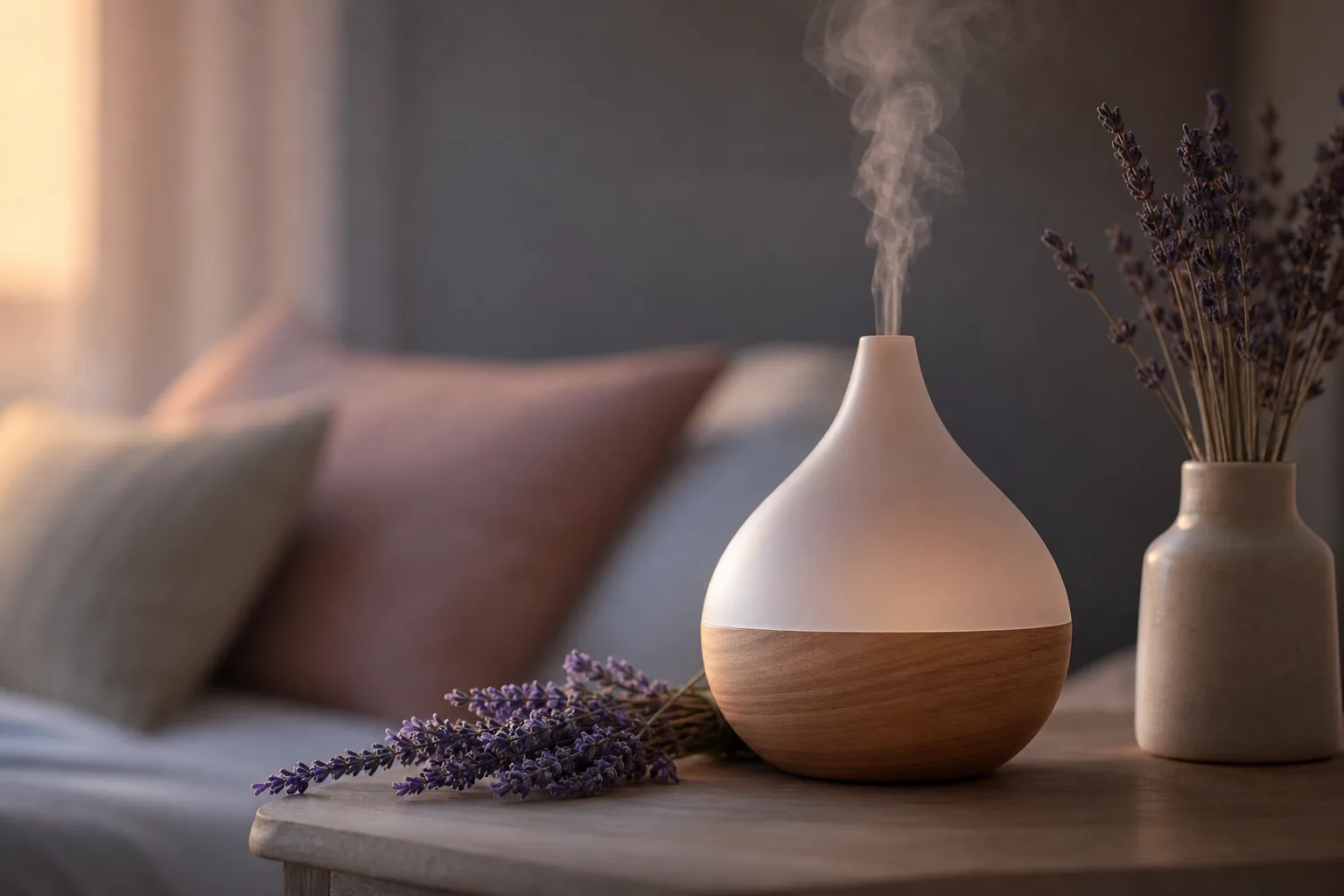
Walk past a frangipani tree after rain, or open a fresh packet of coffee, and something in you shifts before a single conscious thought arrives. Scent is wired into emotion in a way our other senses are not. Aromatherapy takes that everyday truth and turns it into a practice, and somewhere along the way the marketing ran far ahead of the science. This guide walks it back to solid ground: what essential oils can plausibly do for your state of mind, what they cannot, and how to use them safely if you choose to.
One note before we begin: this article is general information, not medical advice. If sleep problems, anxiety, or low mood are weighing on you, please speak with a doctor or a mental health professional.
Why scent speaks to the emotional brain
Smell is the only sense with a near direct line to the parts of the brain that handle emotion and memory. Signals from the nose arrive at the olfactory bulb, which sits close to the amygdala and hippocampus, structures deeply involved in how we feel and what we remember. That is why a scent can carry you back to your grandmother's kitchen faster than any photograph can.
This anatomy explains why aromatherapy is not nonsense. A pleasant, familiar scent genuinely can nudge your emotional state, soften tension a little, and signal to your body that it is safe to wind down. It does not, however, justify the grander claims often made on aromatherapy's behalf.
What the evidence actually supports
Two families of oils appear again and again in research: lavender and citrus.
Lavender is the most studied essential oil for relaxation. Research suggests that inhaling lavender in the evening may modestly shorten the time it takes to fall asleep and improve how rested people feel, especially in people with mild sleep difficulties. Small reductions in self reported anxiety have also been observed in stressful settings such as waiting rooms. The honest summary is that the effects appear real but modest, and they show up most clearly for relaxation and sleep onset, not for treating insomnia or anxiety disorders.
Citrus oils, including sweet orange, lemon, and bergamot, are commonly reported to lift mood and take the edge off tension. Some research suggests that a few minutes of citrus inhalation can ease feelings of stress in the moment. Think of a gentle nudge rather than a lever.
Two caveats keep careful researchers humble. First, many studies in this field are small, and it is very hard to blind someone to a smell, so expectation almost certainly plays a part. Second, some of the benefit probably comes from the ritual itself: slowing down, breathing deliberately, marking a boundary between the working day and the evening. That does not make the benefit less real. It simply means the oil is one ingredient among several.
What aromatherapy cannot do
This is where a sober guide earns its name. Essential oils do not treat depression, anxiety disorders, or any other mental health condition. They do not cure infections, balance hormones, or detoxify anything. There is no reputable evidence for using them in place of prescribed medication, therapy, or a doctor's care, and any label or seller implying otherwise is telling you something useful about how far to trust the rest of their claims.
The most helpful frame is this: aromatherapy sits closer to a warm bath or a beloved piece of music than to a medicine. Pleasant, supportive of a calmer state of mind, worth having, and not a treatment. If worry, low mood, or broken sleep is interfering with your daily life, that deserves proper professional support, not a diffuser.
Quality matters: what HECT chemotyped means
Not every bottle labelled lavender contains the same thing. The chemistry of an essential oil varies with the exact species of the plant, the part of the plant distilled, where it grew, and when it was harvested. Two oils from what looks like the same plant can have meaningfully different compositions, and therefore different effects and different safety profiles.
Chemotyping addresses this. A chemotyped oil, often labelled HECT, from the French Huile Essentielle Chemotypee, meaning chemotyped essential oil, has been analysed so that its botanical species, plant part, and dominant chemical profile are identified and stated on the label. It works like an identity card for the bottle. The Belgian laboratory Pranarom built its reputation on this standard, and the Pranarom chemotyped range is a useful benchmark for what complete labelling looks like: Latin botanical name, plant part, chemotype, and batch information.
For a home user, the practical lesson is simple. Choose oils that state their Latin name and plant part, are 100 percent pure rather than blended with synthetic fragrance, and come from a supplier willing to show what is in the bottle. Perfumed fragrance oils have their place in candles, but they are not aromatherapy.
Using essential oils safely
Essential oils are highly concentrated plant extracts, and respecting that concentration is most of the safety story. A few habits cover the majority of home use:
- Dilute before any skin contact. A common adult guideline is around 1 to 2 percent, roughly 1 to 2 drops of essential oil per teaspoon of a carrier such as coconut or sweet almond oil. Never apply undiluted oil to skin.
- Diffuse in intervals, not all evening. Around 15 to 30 minutes in a ventilated room is plenty. Continuous diffusion is commonly linked with headaches and irritation, and more is not better.
- Never swallow essential oils unless a qualified health professional has specifically advised it.
- Take extra care with children. Diffuse lightly and briefly, never in a closed room with a baby, and keep bottles locked away. Some oils rich in menthol or eucalyptus compounds are not suitable for young children at all.
- In pregnancy and while breastfeeding, keep use minimal and check with your midwife or doctor first, since several common oils are not recommended.
Two further points are worth knowing in a sunny country like ours. Citrus oils applied to the skin can increase sensitivity to sunlight, so keep them for the diffuser or for evening use. And if you live with asthma, epilepsy, or another chronic condition, ask your doctor before making oils part of your routine. As above, this is general safety information, not personal medical advice.
Finding trustworthy oils in Mauritius
The practical challenge locally has always been sourcing fully labelled, chemotyped oils rather than anonymous bottles. That is slowly changing. Naturespan, a new certified organic grocery destination in Mauritius, opens stores in Grand Baie and Tamarin from September 1, 2026, and its food truck is already on the road. Alongside organic food, it carries a dedicated essential oils range built around chemotyped, fully labelled bottles. Wherever you choose to buy, apply the same checklist: Latin name, plant part, chemotype where relevant, and a clear batch number.
The sober takeaway
Used honestly, aromatherapy is a small, pleasant tool for tending the state of mind you bring to the rest of your day. A few drops of lavender in a diffuser as part of a wind down routine, a breath of sweet orange when the afternoon drags, ten slow breaths while the scent does its quiet work. Pair it with the things that carry the real weight, regular sleep, movement, daylight, and connection with people you love, and it earns its modest place. Expect a nudge, not a miracle, and it will rarely disappoint you.
Caring for your mind is the foundation of a longer, healthier life. Explore the wider Healthspan health ecosystem.
